In today’s data-driven world, organisations increasingly depend on the quality, accessibility, and reliability of their data to make sound business decisions. Behind every successful data initiative stands a committed Data Steward — a professional who ensures that data is properly managed, trusted, and used responsibly. While many individuals now carry the title, not all fully grasp the breadth of their responsibilities or unlock the full potential of their role.
Those who do embrace it make an undeniable impact. Exceptional Data Stewards don’t just maintain data assets; they elevate data to a strategic organisational resource. They enable better decision-making, ensure compliance with data governance principles, and champion a culture of data quality across the enterprise.
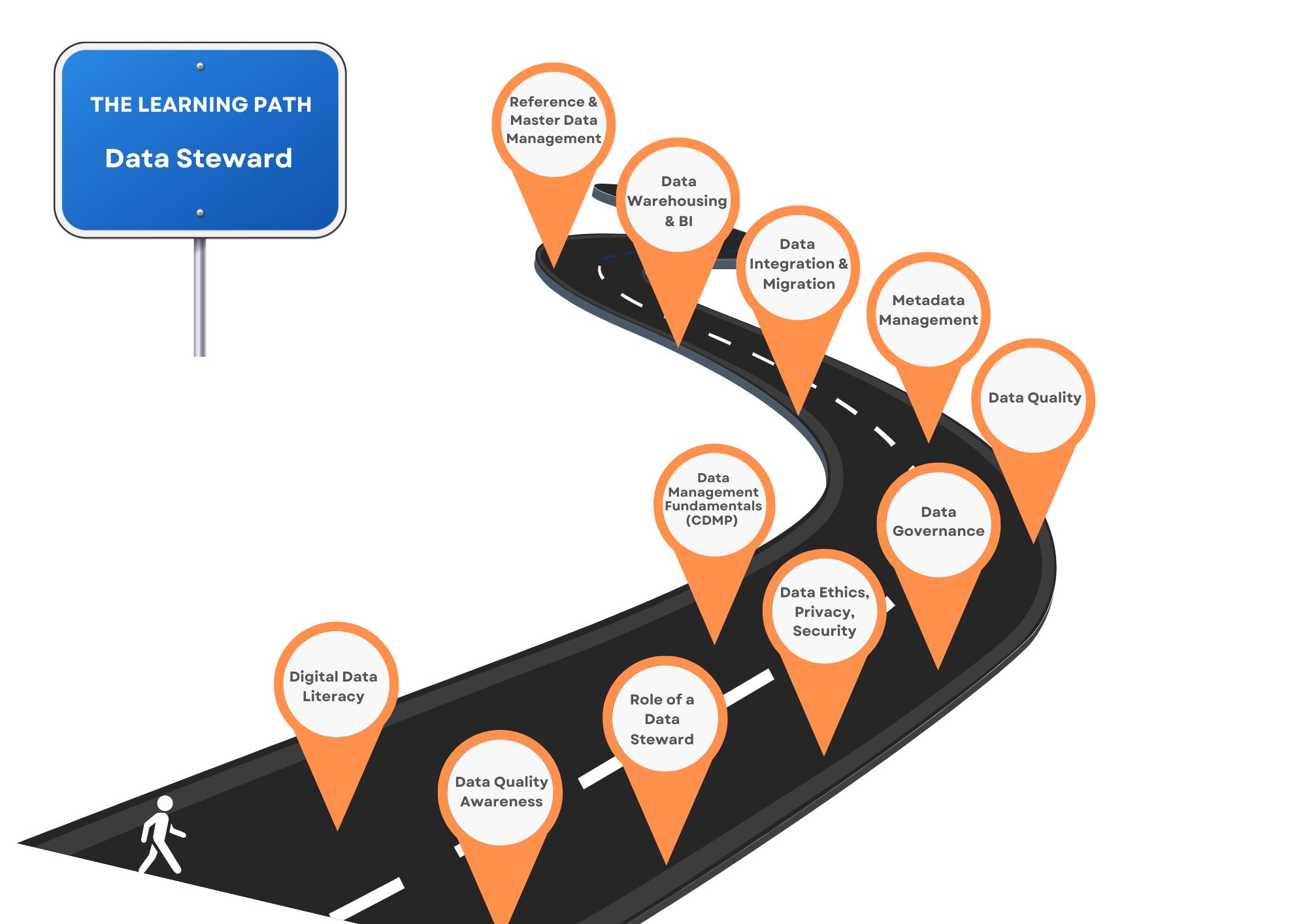
A well-defined Learning Path is essential for developing the competencies and mindset required to excel in this role. Structured learning ensures that Data Stewards build their skills in a logical sequence, progressing from foundational knowledge to advanced, specialised expertise. The following path outlines key stages to help you grow from capable to exceptional.
1. Begin with Foundational Data Literacy and Data Quality Awareness
Before mastering the technical aspects of data management, it’s vital to understand the language of data. Data Literacy is the ability to read, interpret, and communicate data meaningfully. It equips you to engage confidently with stakeholders, from executives to analysts, and to advocate for data-driven thinking across the organisation.
Equally important is awareness of Data Quality — understanding the principles of accuracy, completeness, consistency, timeliness, and validity. Poor-quality data erodes trust, leads to flawed decisions, and wastes valuable resources. A Data Steward with a strong grounding in Data Quality can not only identify and correct issues but can also educate others about the importance of maintaining high-quality data at every stage of the data lifecycle.
Start your learning journey by exploring introductory courses, such as data literacy and foundation. This will provide you with the conceptual grounding to help you explain to others why data matters.with the conceptual grounding to help you explain to others why data matters.
2. Enrol in a Comprehensive Data Steward Training Course
Once you have a solid foundation, the next step is formal training specifically designed for Data Stewards. A comprehensive Data Stewardship course will help you understand how your role fits into the broader Data Management ecosystem.
Look for training that covers:
Roles and Responsibilities: What you are accountable for as a Data Steward, and how your work intersects with roles like Data Owners, Data Governance, and other Data Professionals
Practical Tools and Techniques: Methods for cataloguing data assets, defining metadata standards, managing data issues, and improving data quality etc.
Business Alignment: How to ensure that your stewardship activities support business goals, compliance requirements, and ethical data usage.
An effective course will blend conceptual learning with real-world application, such as case studies, hands-on exercises, and exposure to Data Management tools. This experience helps you translate knowledge into day-to-day effectiveness and will position you to fill the critical role of Data Steward for your organisation.
3. Build Core Competencies across Data Management Disciplines
To be effective, Data Stewards need to master several core competencies. These include:
Data Governance: Understanding the policies, standards, and control processes that ensure data is properly managed and aligned with organisational objectives
Metadata Management: Knowing how to define, capture, and use metadata — the “data about data” that provides context, meaning, and traceability
Data Quality Management: Establishing and maintaining processes for profiling, monitoring, and improving data quality across systems
Privacy and Data Ethics: Ensuring compliance with data protection laws (such as POPIA or GDPR) and promoting ethical use of data.
Building competency in these areas transforms you from a data caretaker into a data advocate — someone who understands both the technical and human sides of managing data responsibly.
4. Focus on Specialist Areas aligned to your Organisation’s Priorities
As your confidence grows, consider your daily activities and business objectives and identify where further training will add the most value. Take time to study frameworks like the DAMA-DMBOK (Data Management Body of Knowledge), which provides a comprehensive view of all data disciplines.
Reflect on the following:
Are you involved in a Data Migration or Integration project where data accuracy and consistency are critical?
Do you contribute to Business Intelligence or Analytics initiatives where data availability and interpretation drive insights?
Is your organisation implementing a Master Data Management (MDM) system?
Each of these areas demands specialised Data Management knowledge. Exceptional Data Stewards continuously align their learning with their organisation’s goals and data initiatives.
Seek out opportunities to gain hands-on experience, such as participating in data governance committees, conducting data quality assessments, or contributing to metadata documentation. The more you engage with real data challenges, the deeper your expertise becomes.
Remember, the most effective Data Stewards are not confined to a single area — they are versatile contributors who understand how data flows through the organisation and how each system or process impacts overall data integrity.
5. Consider Professional Certification through the DAMA CDMP Program
Once you’ve established your specialist skills, consider pursuing formal recognition through the DAMA Certified Data Management Professional (CDMP) program. The CDMP certification, recognised globally, validates your knowledge across the full range of Data Management disciplines defined by DAMA International.
The Data Management Fundamentals exam is an excellent starting point and can be taken at any stage of your learning journey. Achieving CDMP certification in both fundamentals and specialist disciplines will demonstrate your commitment to professional excellence and your knowledge of data management best practices, enhancing your credibility within your organisation and across the broader data community.
6. Cultivate Continuous Learning and Collaboration
The data landscape evolves rapidly — with new technologies, regulations, and practices emerging constantly. Exceptional Data Stewards stay relevant by engaging in continuous learning.
Join professional communities, attend webinars or conferences, and follow thought leaders in the field. Participate in internal data governance forums to exchange insights with colleagues. Deep your understanding, build confidence, and connect to a global network of peers and mentors.
Collaboration is another hallmark of success. Data Stewardship doesn’t operate in isolation; it thrives on partnership with IT, business units, and compliance teams. By building relationships and fostering open communication, you can help bridge gaps between technical experts and business decision-makers, ensuring everyone is aligned around shared data goals.
7. Embody the Mindset of a Data Champion
Ultimately, becoming an exceptional Data Steward is not just about mastering processes — it’s about adopting a leadership mindset.
Exceptional stewards view data as an asset to be nurtured, protected, and leveraged. They are change agents who champion data culture and help others see the value of working with trusted, well-managed data. They lead by example, demonstrating integrity, and accountability for the data quality.
Strive to go beyond compliance. Encourage innovation, support data literacy initiatives within your organisation, and promote how data can create value for customers, employees, and the whole business.
Conclusion
The journey to becoming an outstanding Data Steward is one of continuous growth and meaningful impact. By following a structured learning path — from foundational literacy to advanced certification — you not only strengthen your own career but also contribute significantly to your organisation’s success.
Your organisation’s data, and indeed its future, depend on people like you: individuals who take stewardship seriously, who see data not just as information but as a strategic asset, and who are committed to upholding its quality, integrity, and ethical use.
Good luck on your journey to becoming an exceptional Data Steward!