A Thought Leadership Paper by Jill Flynn published in collaboration with Datanacity
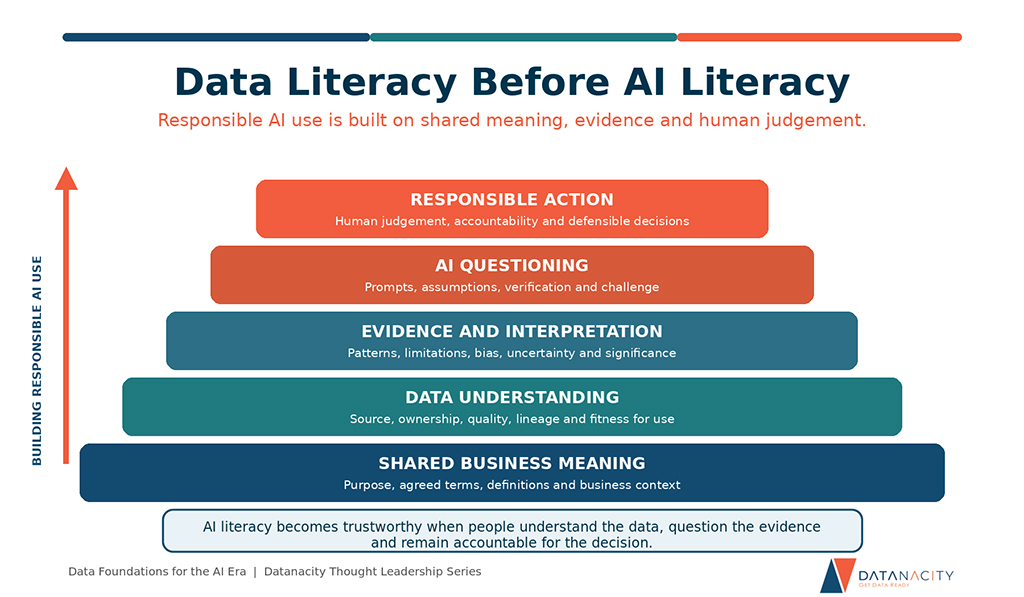
Figure 1: The Literacy Path to Responsible AI Use
Opening position
The first article in this series established that trusted data remains the foundation of trustworthy AI. The next question is whether the people using that data, and the AI systems built upon it, are able to understand what sits beneath the answer.
AI literacy is often discussed in terms of knowing what an AI tool can do, writing better prompts and using outputs efficiently. These capabilities matter. However, they are incomplete without data literacy: the ability to read, interpret, question, communicate and use data in context.
Can people explain what the data means, where it came from and why an AI answer should be believed?
Why this still matters
Data literacy is not the same as data science, statistical expertise or technical proficiency. It is the practical ability to understand what data represents, how it was created, what it can and cannot support, and how it should inform a decision.
This begins with shared language. A term such as customer, product, revenue, risk, complaint or active account may appear straightforward, yet different parts of an organisation can define it differently. A business-to-business customer may be a legal entity, while an individual contact is a person associated with that entity. A revenue figure may be recognised, invoiced, collected or forecast. Without agreed meaning, people can use the same words while working from different realities.
Data literacy also requires people to ask what sits behind a number. Where did it come from? Who owns it? How current is it? What does a missing value mean? Was the data collected for the purpose now being considered? Does the apparent pattern reflect a real change, or a change in definitions, systems or collection methods?
The output of analytics is not automatically an insight, and an AI-generated response is not automatically evidence. Both require interpretation. Data literacy provides the human capacity to connect a result to business context, recognise limitations and explain why a conclusion should or should not be trusted.
What has changed in the AI era
AI has made it easier for more people to interact with data and information. Natural-language interfaces allow users to ask questions without writing code, navigate large document collections and receive answers in seconds. This can widen access and accelerate learning.
At the same time, the distance between the user and the underlying evidence can increase. A dashboard usually exposes at least some measures, filters and categories. An AI answer may combine structured data, documents, retrieved content and model-generated language into one fluent response. The result can sound complete even when the source is partial, outdated, ambiguous or unsuitable for the question.
This changes the literacy requirement. People need more than confidence with an AI interface. They need to distinguish fluency from reliability, summary from evidence, correlation from explanation, and recommendation from accountable decision. They also need to recognise that every answer is shaped by definitions, source selection, metadata, quality, rules, retrieval methods and assumptions.
AI literacy therefore sits on top of data literacy. It adds an understanding of model capabilities, limitations, prompts, generated content, bias, verification and appropriate human oversight. It does not replace the more basic discipline of understanding the data and information on which the system depends.
Practical implications for organisations
Organisations should not treat literacy as a once-off training course or a generic awareness campaign. It is an operating capability that must be connected to roles, decisions, governance and daily work.
The practical implications include:
Shared business language must be established. Critical terms should be defined, governed and made easy to find through glossaries, dictionaries and business metadata.
Literacy should be role-based. Executives, managers, analysts, frontline staff, data stewards and AI practitioners need different levels of depth, but all need enough understanding to use data responsibly.
Evidence should be visible. Where possible, users should be able to see the source, owner, date, quality status, lineage and limitations associated with important data and AI outputs.
Questioning skills must be taught. People should ask what evidence supports an answer, which assumptions were made, what context is missing, whether alternative explanations exist and what requires verification.
Challenge must be culturally safe. Employees need permission and practical routes to question data, report concerns, escalate uncertainty and override inappropriate recommendations.
Literacy must connect to accountability. The person using an AI output remains responsible for understanding its relevance and for applying appropriate human judgement before action is taken.
What good looks like
A data-literate and AI-literate organisation does not expect every employee to become a data scientist or AI specialist. It expects people to understand the data relevant to their roles, use agreed language, ask sensible questions and know when specialist support or escalation is required.
Business users can distinguish between a data point, a pattern, an interpretation and a recommendation. Analysts explain assumptions and limitations rather than presenting outputs as self-evident. Data owners and stewards make definitions, quality expectations and accountability visible. AI users verify important outputs, seek supporting evidence and understand that a polished response may still be incomplete or wrong.
Leaders also model the right behaviour. They ask where the evidence came from, whether the definition is agreed, what may be missing and who remains accountable. They create an environment in which people can challenge an answer without being seen as resistant to innovation.
The goal is not scepticism for its own sake. It is informed confidence. People should be able to use data and AI with curiosity while retaining the judgement required to interpret, question and act responsibly.
Questions for leaders
As organisations expand AI use, leaders should ask:
Do our people understand the business definitions and data relevant to the decisions they make?
Can users explain where important data and AI-generated answers come from, and what limitations apply?
Are we teaching people to question evidence and assumptions, not only to use tools and write prompts?
Do our systems make ownership, quality, lineage and source information visible enough to support responsible use?
Does our culture allow people to challenge an apparently confident AI answer without fear or delay?
Are decision rights and human accountability clear when AI contributes to a recommendation or action?
Closing thought
AI can make information easier to reach, but it cannot remove the need for people to understand what that information means.
Before organisations teach people how to prompt AI, they should ensure that people can read the evidence, understand the definitions, recognise the limitations and judge whether the answer is fit for the decision at hand.
AI literacy without data literacy may create confident users. It does not necessarily create responsible ones.
Data literacy is the human foundation that allows AI literacy to become useful, trustworthy and accountable.
Data literacy is the human foundation that allows AI literacy to become useful, trustworthy and accountable.
This article forms part of the Datanacity thought leadership series, Data Foundations for the AI Era. It draws on Jill Flynn's AIData body of work and related frameworks concerning data trust, meaning, human judgement and responsible enterprise intelligence.